
CargoWise scores 2.9 out of 5 on Capterra from 32 reviews - and freight forwarders who have lived through its setup tend to know exactly why. Steep learning curves, opaque pricing, and costly exit conditions have pushed a growing number of operators to ask what else the market offers.
CargoWise's Capterra value-for-money score is 2.6 out of 5. Reviewers regularly mention unexpected price hikes, setup costs that demand pricey outside consultants, and a support team that tends to redirect users to documentation rather than actually fixing problems. For mid-sized forwarders without a dedicated IT department or a six-figure implementation budget, those tradeoffs hit hard.
The alternatives below all serve the same audience - freight forwarders running air, sea, and land operations - but differ meaningfully in pricing transparency, setup speed, and which compliance markets they support natively. Each entry reflects only verified information; pricing and feature claims that couldn't be confirmed are left out.
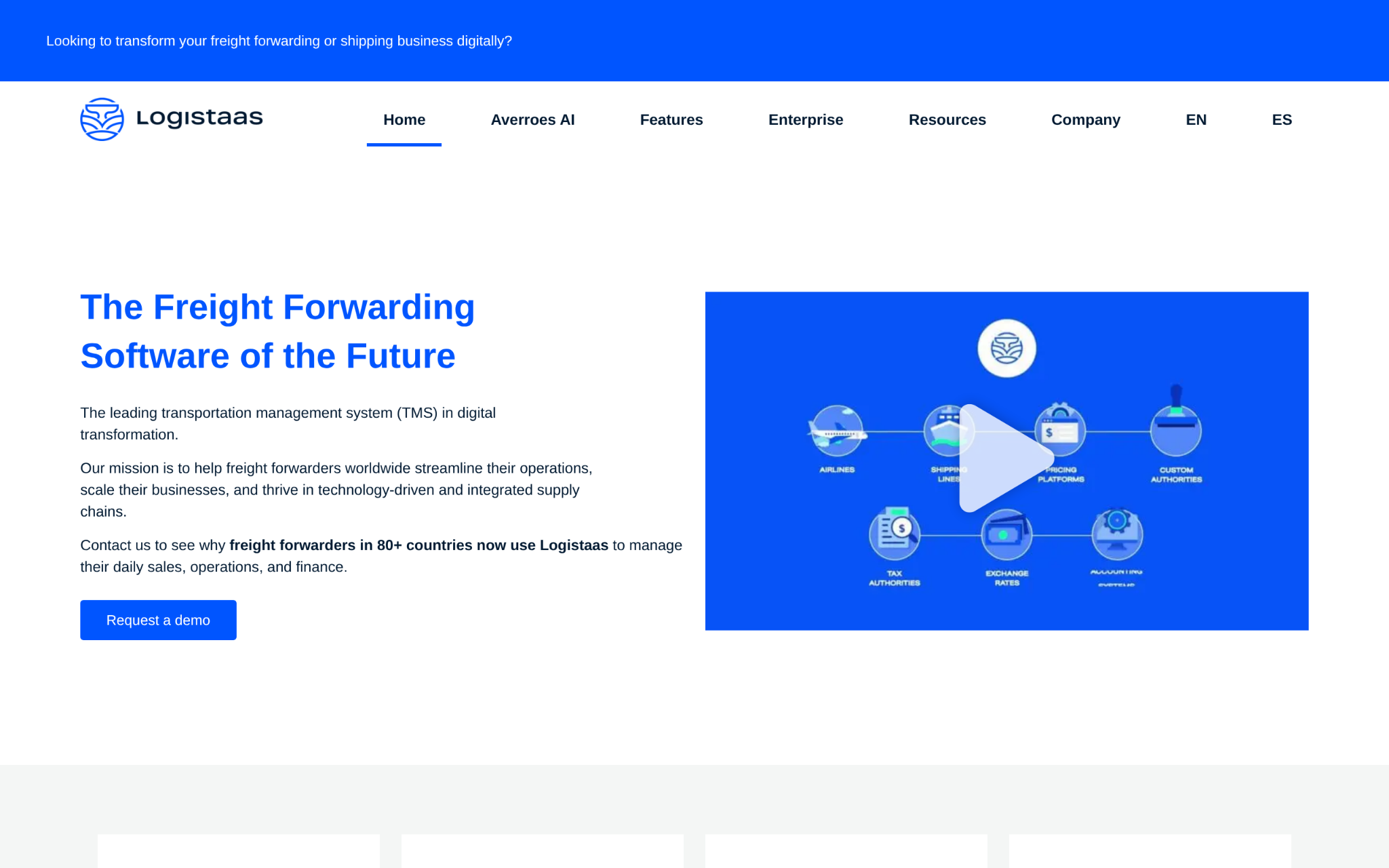
Best for: Freight forwarders needing native customs and e-invoicing compliance across multiple markets
Deployment: Cloud only (AWS Frankfurt, Alibaba Cloud Hong Kong)
Modes: Air, sea, land, customs clearance
Standout: Native accounting module, e-invoicing across roughly 30 jurisdictions, direct customs filing for Dubai, Oman, the US, Mexico, and Uruguay
Logistaas is a transportation management system built for freight forwarders, NVOCCs, and consolidators, operating across more than 80 countries. It pulls freight-specific CRM, multi-mode operations, finance, and native accounting into one platform - so the finance team isn't re-entering invoices into a separate system at month end. Carrier connectivity spans more than 50 ocean carriers through INTTRA and more than 100 airlines for e-AWBs through Traxon CargoHub and Descartes, with live spot rates and eBooking via WebCargo. Pricing starts at $45 per user per month for the CRM-only Sales Booster plan, climbing to $85 per user per month for the all-in-one platform with native accounting included. Capterra rates it 4.5 out of 5 across 33 reviews, with a 4.6 for ease of use - a striking contrast to CargoWise's 2.7.

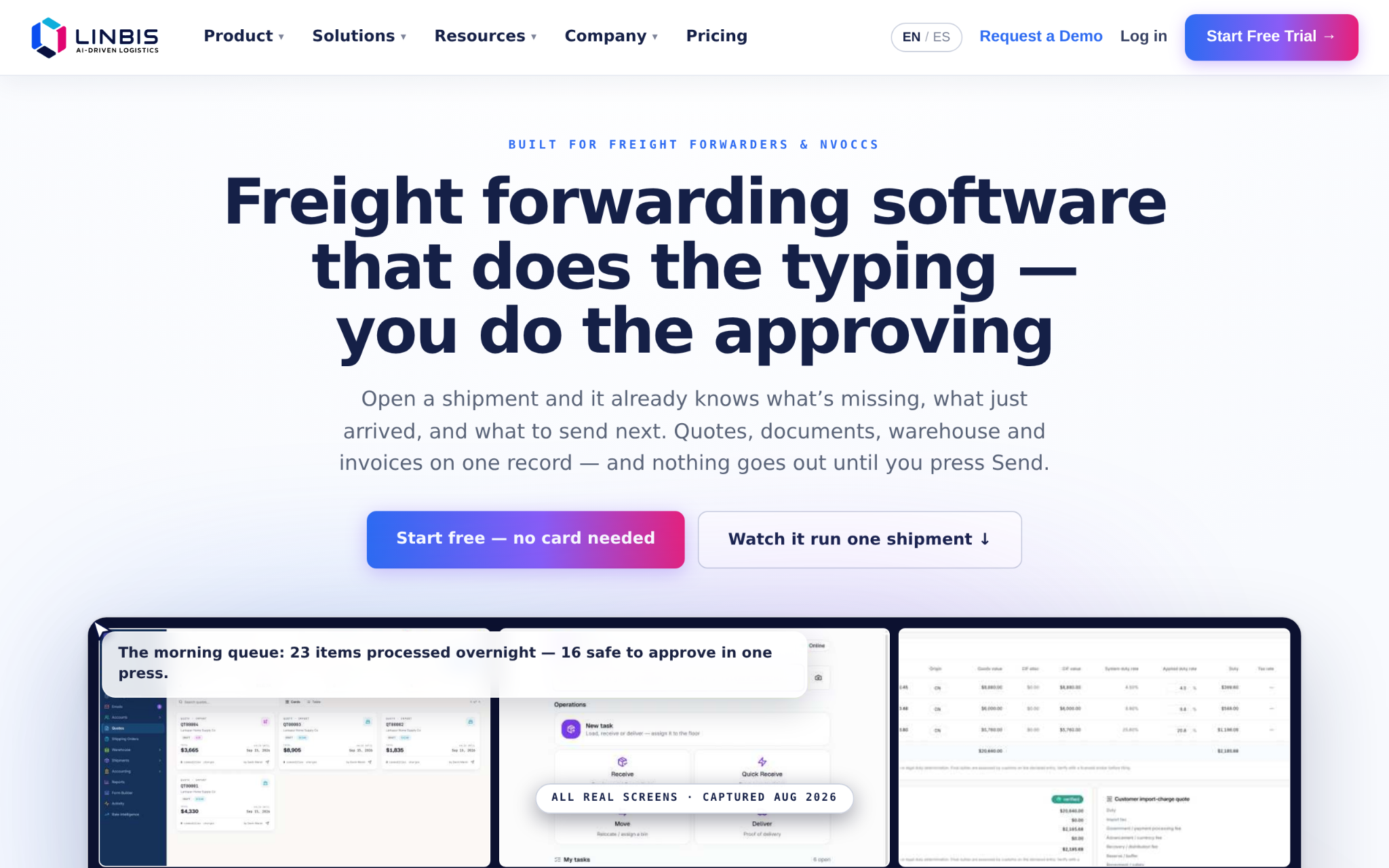
Best for: Freight forwarders and 3PLs who want a single platform covering operations and warehousing
Deployment: SaaS
Modes: Air, ocean, ground
Standout: AI-driven document creation, warehouse management module, predictive analytics for shipping volumes
Linbis is a logistics platform aimed at freight forwarders, third-party logistics providers, and distribution centers. One subscription covers freight management, warehouse management, quotation, and dispatch, no infrastructure to buy or maintain. Its AI document creation feature lets users generate bills of lading, commercial invoices, and similar paperwork by copying and pasting information, which cuts manual data entry on routine documentation considerably. Shipment performance dashboards track on-time delivery and carrier metrics alongside financial analytics for keeping tabs on profit margins. Forwarders running an attached warehouse operation will find the combined freight and WMS coverage genuinely useful; those without warehousing needs may find the overall scope broader than they actually require.
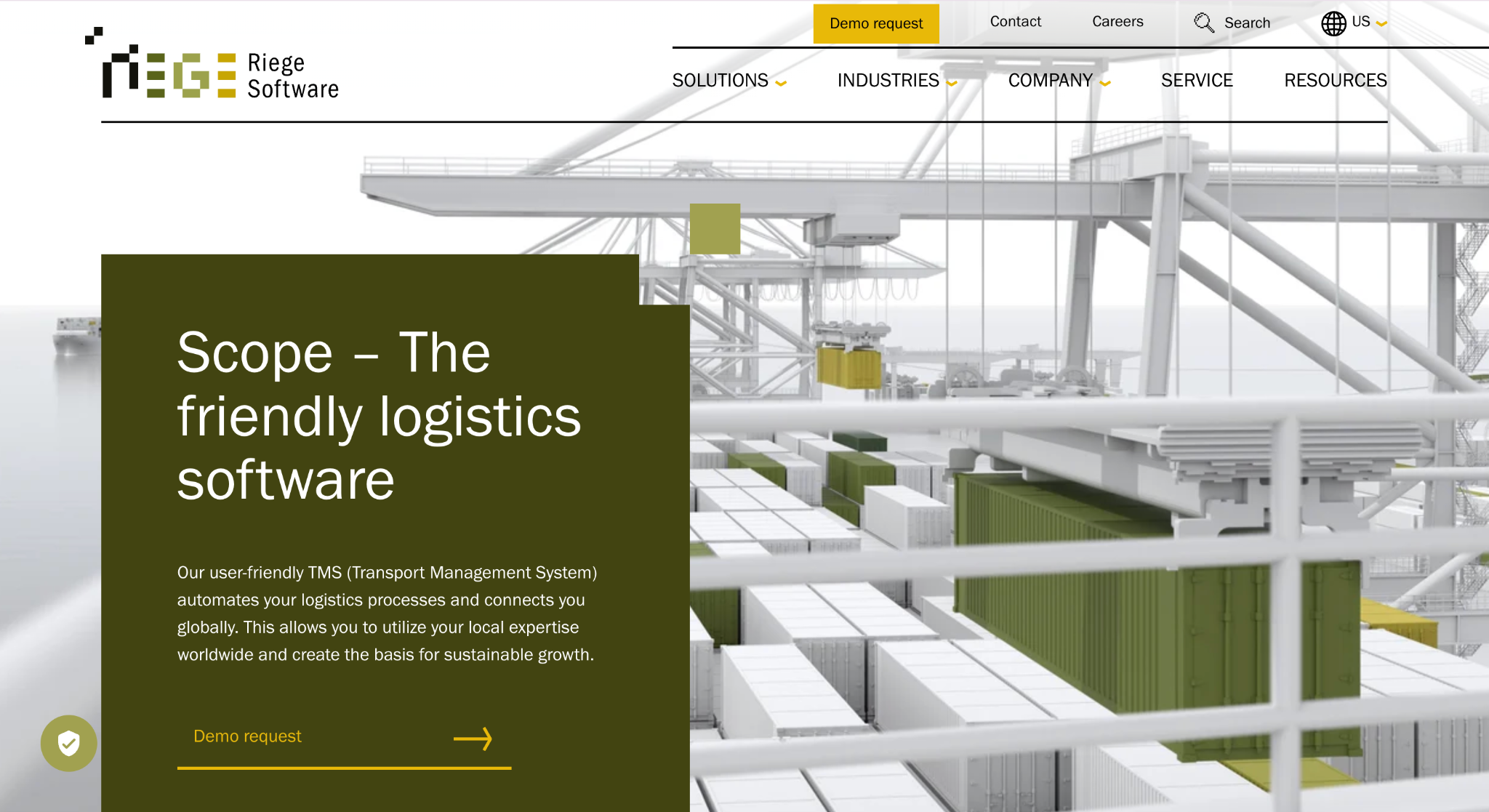
Best for: Mid-sized to larger forwarders who prioritize community-based collaboration and customs connectivity across Europe and North America
Deployment: SaaS
Modes: Air, ocean, customs
Standout: Scope Community for stakeholder data exchange, emissions calculation, customs filing for Germany, Switzerland, the Netherlands, and the US
Riege has been building logistics software since 1985. Its flagship product, Scope, serves more than 900 customers and over 16,000 users across more than 60 countries, with seven branches spread across Europe, Asia, and the Americas. Scope's customs connectivity covers Germany, Switzerland, the Netherlands, and the United States, and the platform includes real-time tracking, automated process tools, and an emissions calculation feature. Pricing runs on a subscription basis, charged per user or per module. But forwarders whose operations sit primarily in markets outside Scope's customs geographies may find its compliance footprint narrower than platforms designed around a broader international reach.
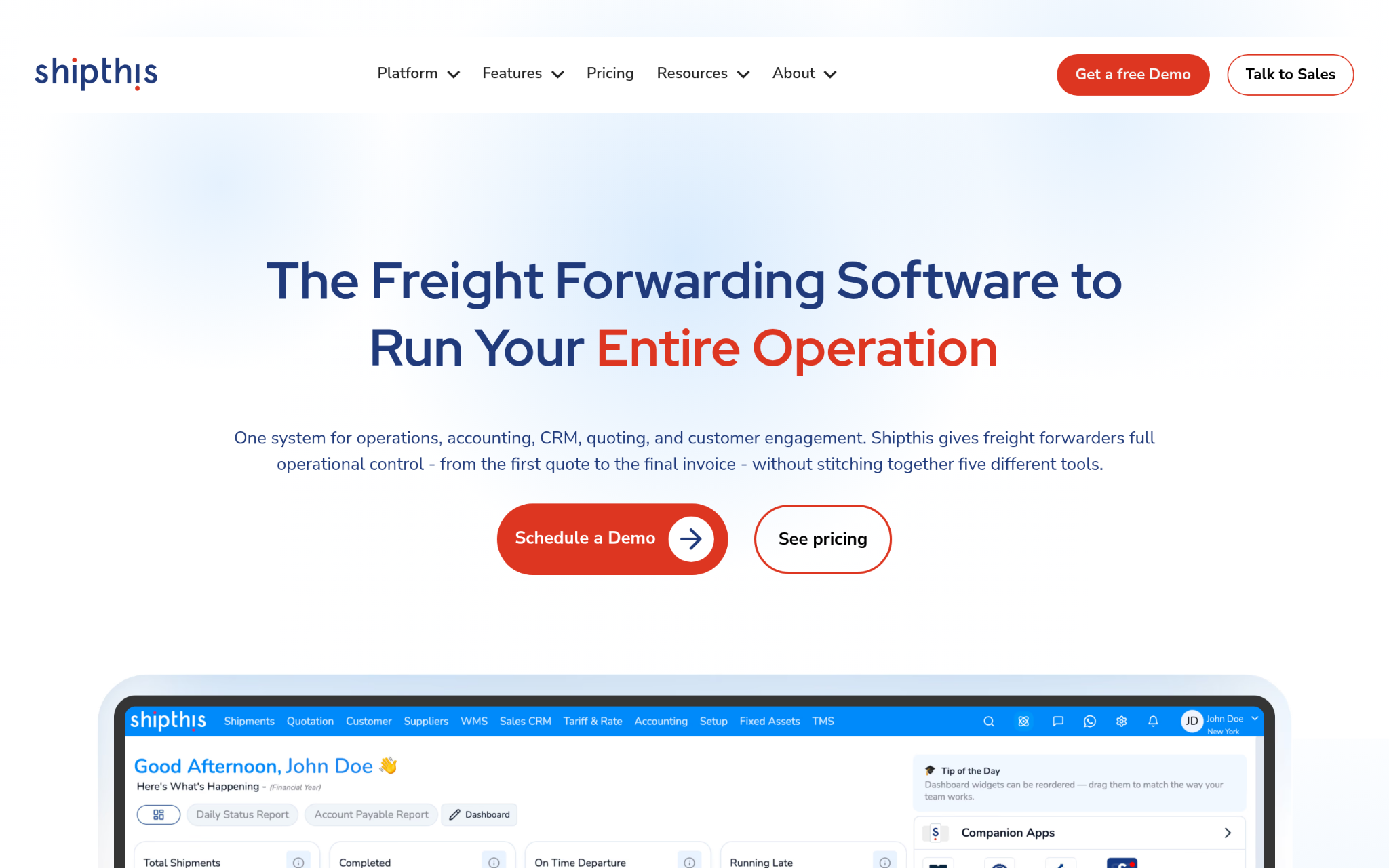
Best for: Forwarders and NVOCCs wanting an AI-native freight ERP with end-to-end management across all transport modes
Deployment: SaaS
Modes: Air, sea, road, rail
Standout: AI document intelligence ("Magic Drop"), automated email parsing ("Email Bridge"), CO2 emissions tracking per shipment, consolidated job management with container visualization
Shipthis was founded in 2017 and is headquartered in Newark, Delaware. It's positioned as an AI-native freight forwarding platform covering air, sea, road, and rail on a single plan - all features included from day one, with no tiered access to core modules. Coverage spans Shipment Management, Accounting and Finance, Sales CRM, Quotation Management, Tariff and Rate Management, a Customer Experience Portal, Warehouse Management, and a Vendor Portal. The "Magic Drop" feature reads and extracts data from freight documents automatically; "Email Bridge" parses inbound emails to populate shipment records. At 28 employees as of April 2026, it's a smaller vendor - that can limit support depth at scale, but it typically means faster, more direct access to the product team.
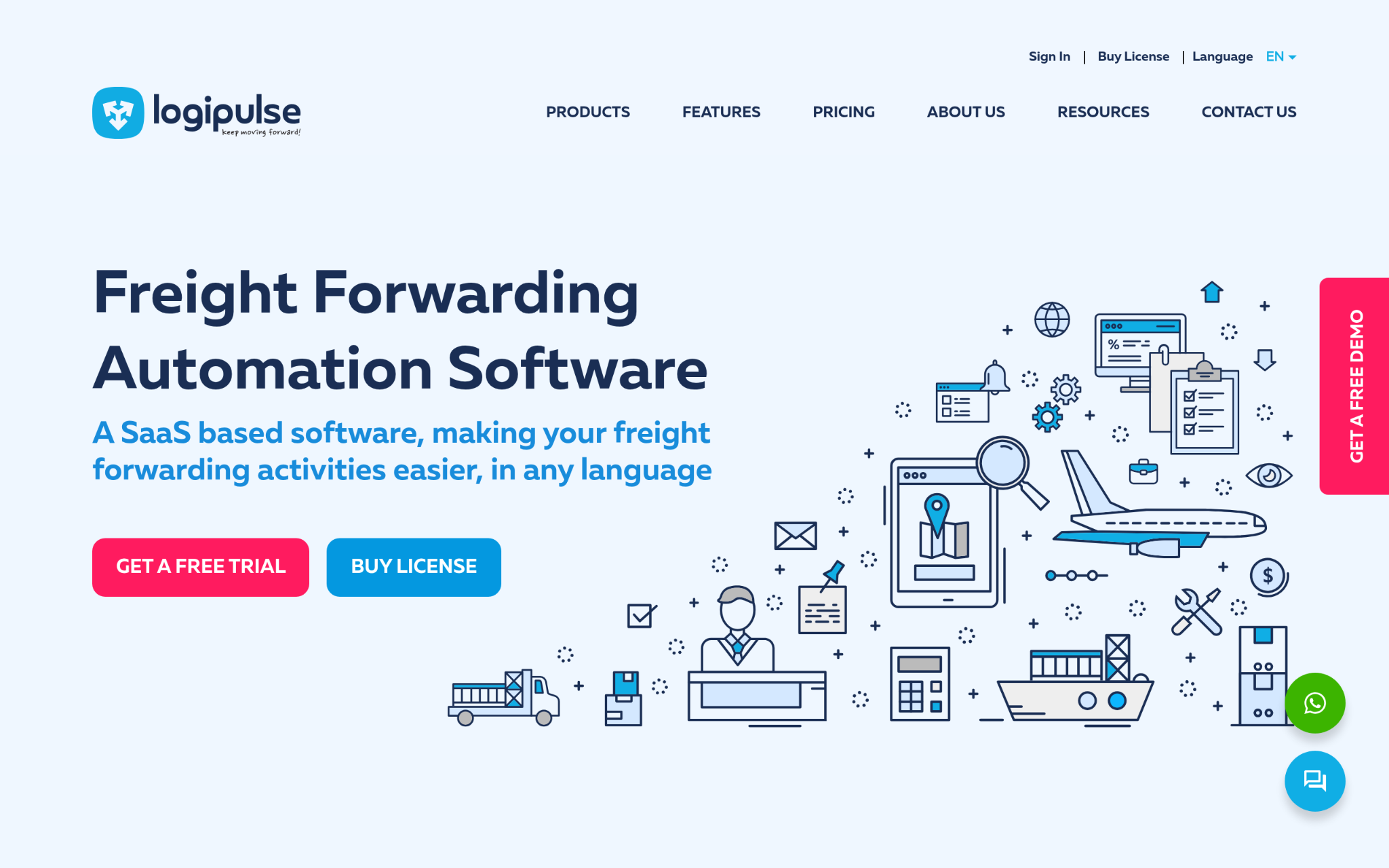
Best for: Freight forwarders in emerging markets looking for cross-device SaaS coverage with strong notification systems and detailed access controls
Deployment: SaaS, accessible on desktop, tablet, mobile, PDA, and scanning devices
Modes: Air, sea, land (import and export)
Standout: Alerts via WhatsApp, SMS, email, and in-system notifications; detailed user permission controls; customs clearance and accounting included
Logipulse is a logistics management platform developed by Stellosys, a software company established in 2010 and headquartered in Kerala, India. Air and ocean freight management, customs documentation, warehouse management, transport management, and accounting all sit within one subscription. The event notification engine pushes alerts through email, SMS, WhatsApp, and in-system messaging, practical for teams whose clients and vendors communicate mainly on mobile. User permission settings give detailed control over who can view sensitive data at the account level. So forwarders running attached warehousing or ground-side operations with scanning devices will find the cross-device accessibility a real operational advantage.
Finding the best CargoWise alternatives for freight forwarders comes down to a few specific operational questions, not a feature checklist.
Compliance footprint. If a forwarder's lanes run through markets with mandatory e-invoicing or local customs filing requirements, the platform's native compliance coverage is non-negotiable. Buying a TMS and adding a compliance workaround is how setup costs double.
Accounting approach. Some platforms integrate with a third-party accounting package; others ship a native module. Forwarders who have been re-keying invoices into a second system for years should weigh the all-in-one option carefully - the time savings compound quickly at high shipment volumes.
Setup pace. A forwarder switching from a legacy system doesn't always have months to spare. Short setup windows and published migration tools reduce the risk of a platform switch disrupting live operations mid-quarter.
Pricing transparency is worth its own note. Platforms that don't publish their pricing structures deserve scrutiny. Hidden costs are common in freight software, and a provider that states its terms clearly upfront tends to behave the same way after the contract is signed.
What counts as the best CargoWise alternative for a freight forwarder doesn't have one universal answer; it has several, shaped by geography, freight modes, team size, and how much of the back office needs to live inside a single system. The options here take different approaches: some prioritize AI document processing, some native accounting, some customs compliance depth. Matching platform architecture to actual operational priorities will narrow the field far faster than any spreadsheet comparison.
 AI tools to find & convert leads.
 Send emails at scale