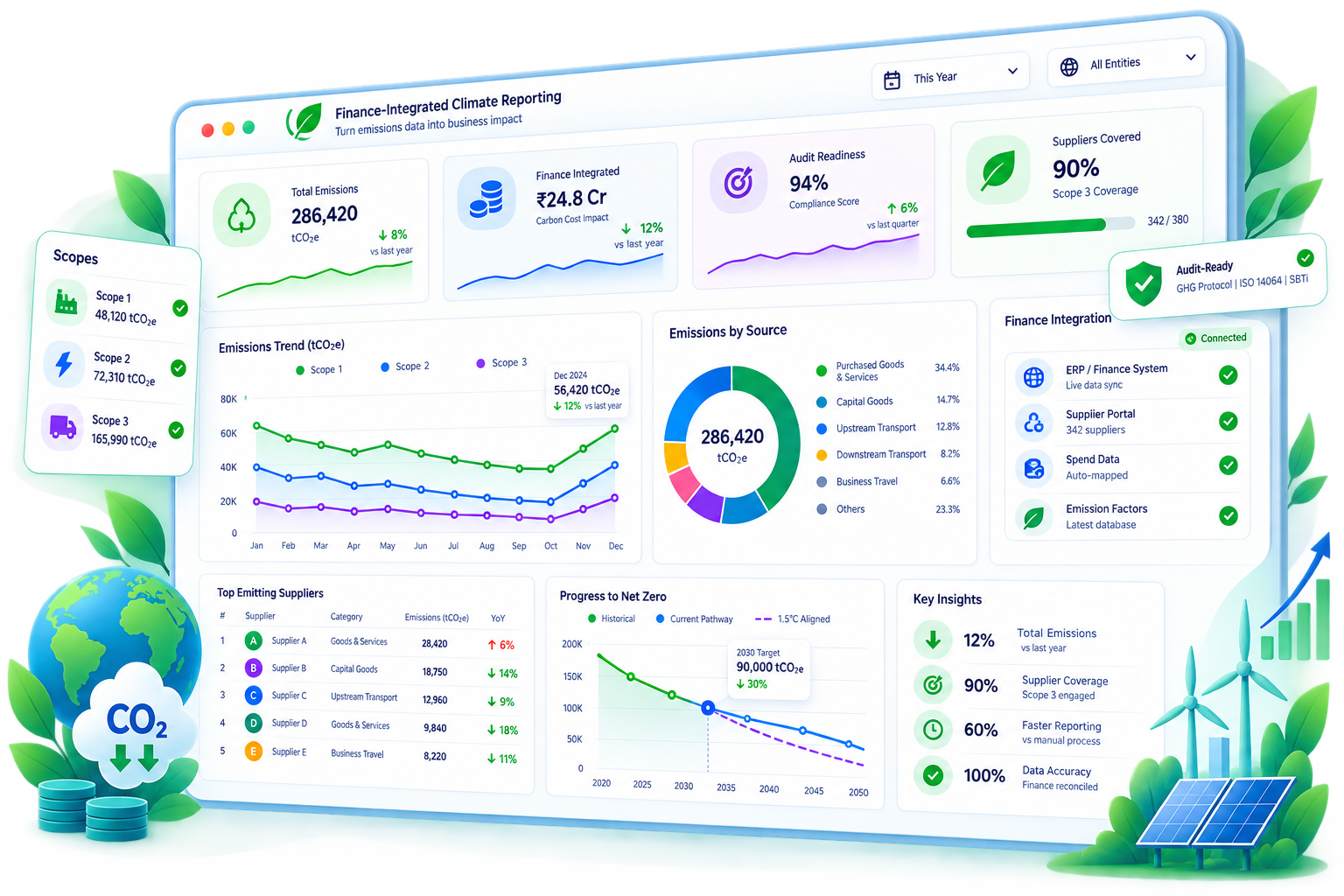
Picture a group with a dozen subsidiaries, a folder of supplier questionnaires, and three reporting outputs due in the same quarter.
The headline emissions figure looks plausible, but nobody can trace it back to an approved source.
The scenario is hypothetical, but the gap it describes, between a number and the evidence behind it, is the gap reporting software has to close.
Start with your reporting requirements, then test each vendor's workflow on representative data.
Key takeaways
Define the reporting boundary first. Entities, periods, owners, and outputs determine what the software must do.
Test a complete evidence trail. Follow one metric from its source to the disclosure, checking each change and approval.
Score the pilot on evidence. Mark mandatory requirements pass or fail, then compare implementation and exit costs alongside subscriptions.
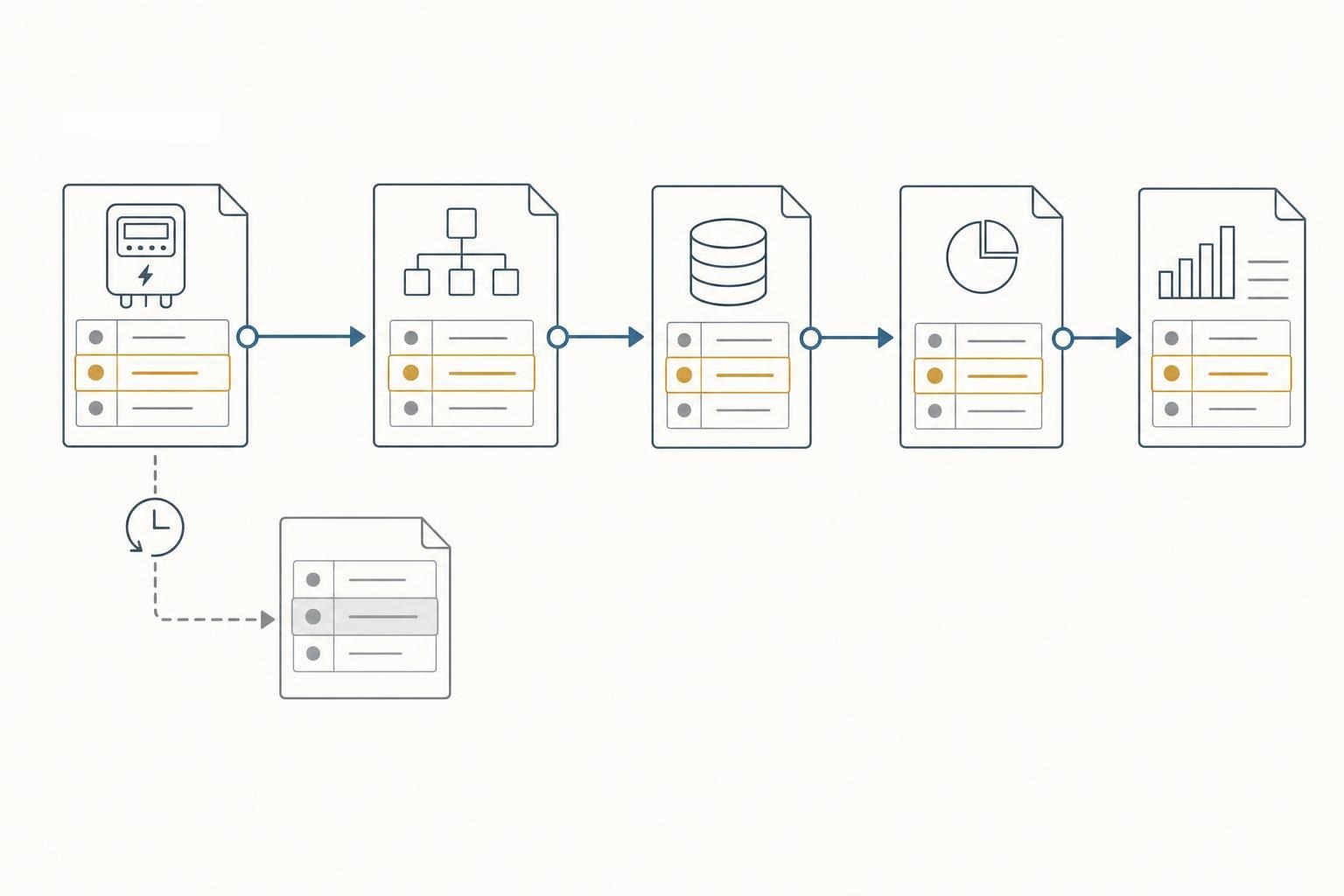
ESG reporting means disclosing an organization's environmental, social, and governance performance to regulators, investors, lenders, or customers in a defined format. A reporting framework sets out which topics to cover and how to report them.
For software selection, look beyond headcount. Complexity also depends on how many entities contribute data, which reporting periods overlap, who owns each number, and how many outputs draw on the same data.
Reporting outputs. List every document the software must help produce and mark each one mandatory or voluntary, with its reporting year.
Settle which topics are material before you decide how to collect data, because the materiality assessment determines which datapoints the software has to capture.
Organizational boundary. Write down which legal entities, sites, and joint ventures sit inside the boundary and how their figures roll up. Ask vendors to demonstrate how their software combines data across that structure.
Reporting obligations change, too. On February 24, 2026, the Council of the EU adopted the final Omnibus I text, which limits CSRD reporting to EU entities averaging more than 1,000 employees and more than EUR 450 million in net annual turnover.
The ISSB's targeted amendments to IFRS S2, issued in December 2025, apply to reporting periods beginning on or after January 1, 2027, with early application permitted. Ask qualified advisers to confirm which requirements apply to each entity before you assess a vendor's framework coverage.
Data owners. Name the accountable person for each source, such as the facilities manager holding utility bills or the procurement team chasing suppliers.
Ownership tends to blur as a group expands: when regional teams build their own workarounds, figures can look comparable while measuring different things.
Capture these requirements on one page: entities, jurisdictions, reporting year, mandatory versus voluntary outputs, existing source systems, and accountable owners.
An emissions calculator and a broader reporting workflow serve different needs. If the hardest problem is calculating emissions, focus the evaluation there. If it is coordinating contributors and reviewers across entities, test that workflow.
Fragmented data is a measurable problem. Sustainability in Action 2026, a survey of 1,000 senior leaders by Capgemini and Sweep, the sustainability intelligence platform, found that 79% considered their sustainability data insufficient to inform wider business strategy because it had not been properly integrated across the organization.
In the two firms' 2024 research, 53% said their data lacked the reliability needed to inform strategy.
The platform centralizes ESG and carbon data across entities, sites, and suppliers, maps that single dataset to CSRD, ISSB, GRI, CDP, SASB, TCFD, California SB 253 and SB 261, and UK SRS, and traces each figure to its source with methodology and version history.
Whichever vendors make your shortlist, judge ESG reporting solutions for complex organizations on that same test: one dataset behind every output, with a trail an auditor can follow from raw input to filed disclosure.

Data lineage is the record of where a number came from, who changed it, and where it ended up. Follow one metric through that record in a live demonstration.
Pick something ordinary, such as purchased electricity for two subsidiaries, and ask each shortlisted vendor to run the same script.
Import representative data. Bring an anonymized extract containing one missing value, one duplicate, and one figure you intend to correct midway.
Ask what the software does with each. Then ask which connections to your ERP, energy, procurement, and HR systems are ready to use and which need development work. Test centralized collection first, because every later check depends on it.
Follow the evidence. Correct the planned figure and ask what updates downstream and what stays in the history. Confirm that the entity total updates, units convert correctly, and the value is tagged to the right framework topic and reporting period.
Log in as a subsidiary contributor to confirm they see only their own entity. For supplier data, ask to see the trail after a supplier submits, a reviewer rejects, and the supplier resubmits. Check whether each value is marked as measured or estimated and who supplied it.
Review the final output. Ask for the exact output your requirements sheet names. A PDF or Word export can support a published report, but those formats alone do not establish support for a machine-readable filing.
Do not assume one import satisfies every framework or that any export is a valid filing. Where AI drafts narrative text, require visible sources and human review, and confirm each vendor's description of its AI in your own pilot.
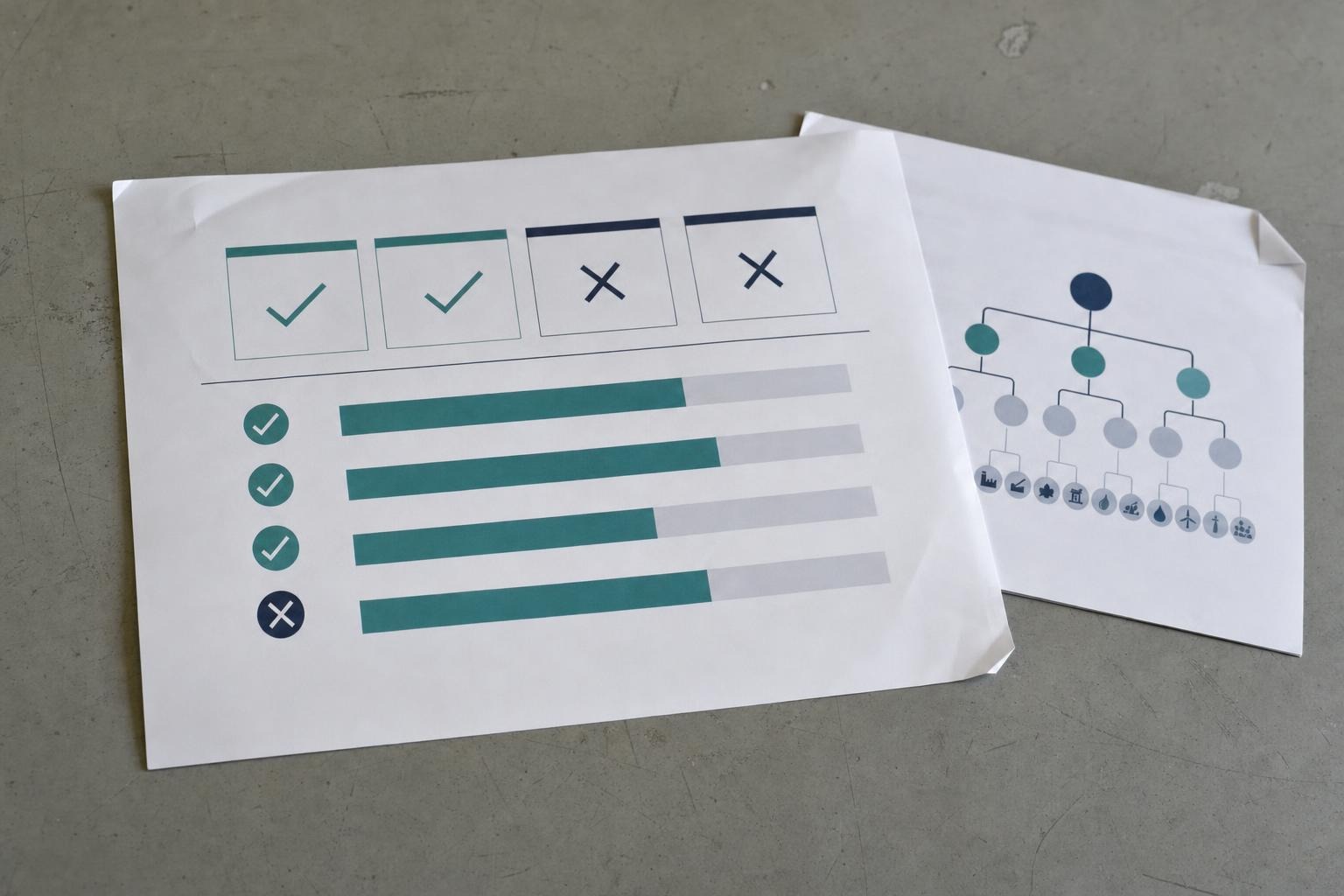
Run the demonstration script as a pilot, using anonymized data where confidentiality requires it. Before weighting anything, mark the mandatory requirements as pass or fail: the named output, the entity rollup, the audit history, and the contributor permissions.
Do not let high scores elsewhere offset a failed mandatory requirement. The weights below are suggestions, not an industry standard.
| Criterion | Suggested weight | What to record in the pilot |
| Data fit and integrations | 30% | Connectors used, manual uploads needed, development work quoted |
| Traceability and review controls | 25% | What the history showed after the correction and rejection tests |
| Reporting-output fit | 20% | Whether the named output appeared in the required format |
| Contributor usability and implementation support | 15% | Steps a subsidiary contributor needed; onboarding scope offered |
| Total cost and exit terms | 10% | Full quote breakdown; export assistance at termination |
Record what you observed: completed tasks, missing evidence, manual workarounds, and anything that depended on a contract term. Keep sales assurances separate from demonstrated results.
Ask each vendor for a written quote that separates:
Subscription fees and the entity or data-volume allowances they include
Modules and connectors
Data migration and training
Support levels and renewal changes
Export assistance if the contract ends
Pricing units differ between vendors, so request a scoped quote for your own structure rather than estimating from published tiers.
Confirm that every capability shown in the pilot is included in the quoted package, and that you can export your data and its audit history in a usable format at exit.
What makes an organization "complex" for ESG reporting? Headcount matters less than structure. The number of contributing entities, overlapping reporting periods, distinct data owners, and outputs drawing on the same data all add complexity.
Should one tool handle both carbon accounting and disclosure? It depends on where the hardest problem sits. If calculation is the bottleneck, weight emissions methodology more heavily. If coordination across entities is the bottleneck, weight workflow, permissions, and audit history.
Does a framework-aligned export count as a regulatory filing? Not automatically. Confirm the required filing format with qualified advisers, then check in the pilot whether the software produces it.
 AI tools to find & convert leads.
 Send emails at scale